 Discover the Shop
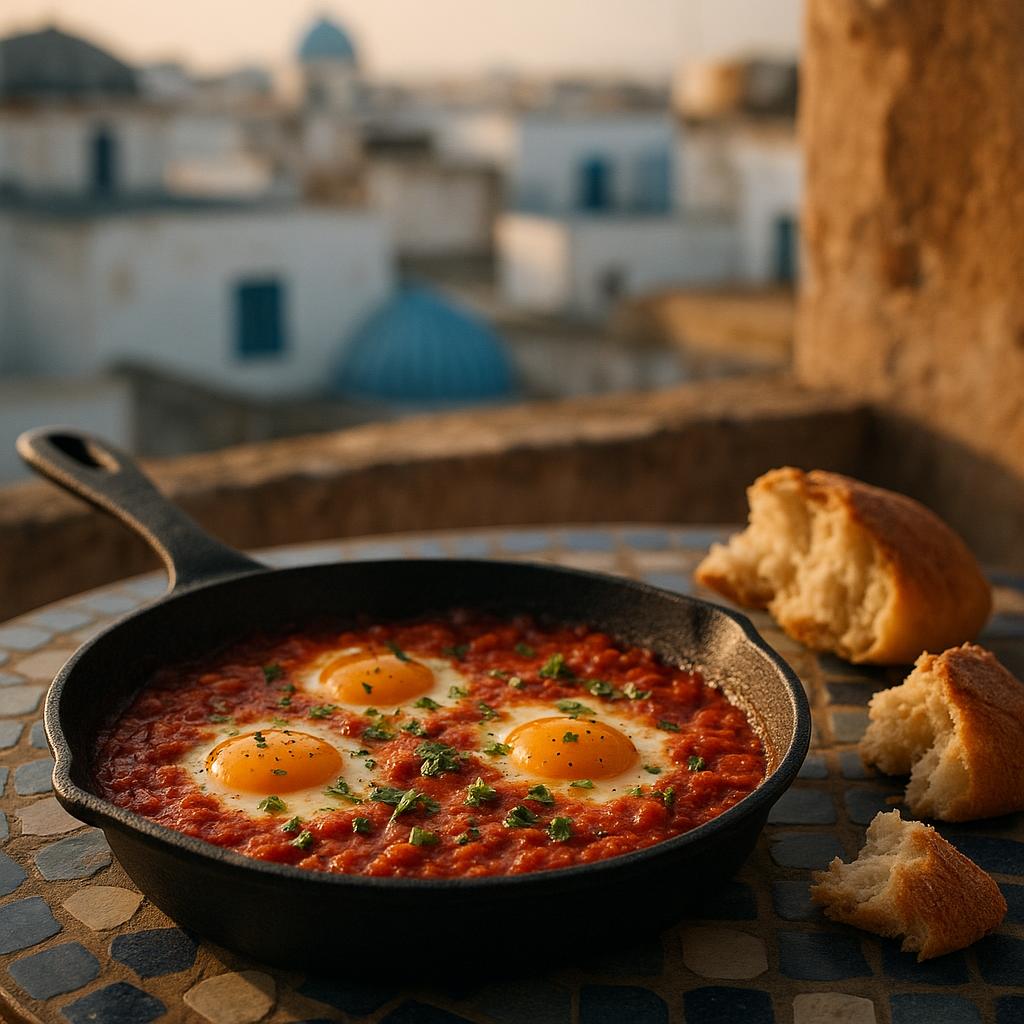
| olive oil | 3 tbsp |
| onion, sliced | 1 pc |
| red bell pepper, sliced | 1 pc |
| garlic cloves, minced | 3 pc |
| ground cumin | 1 tsp |
| sweet paprika | 1 tsp |
| cayenne pepper | pinch |
| crushed tomatoes | 800 g |
| eggs | 6 pc |
| fresh parsley or cilantro, chopped | 2 tbsp |
| crusty bread, to serve | to taste |
Everyone now associates shakshuka with Israeli breakfast tables, but it didn't appear there in any real way until Maghrebi Jewish immigrants, many from Tunisia and Libya, brought it over in the 1950s — and it took until the 1990s to even show up on Israeli restaurant menus. Food historians who've actually traced the dish keep landing back in Tunisian and Libyan kitchens, both Jewish and Muslim, and the name itself supports that: it comes from an Arabic word meaning "mixture," or the verb for bubbling and sizzling, which is exactly what a pan of eggs poaching in tomato sauce sounds like. One popular theory ties it to an Ottoman dish called şakşuka, but that's a case of two unrelated foods sharing a name by coincidence — the Ottoman version is a fried eggplant mezze with no eggs in it at all, a completely different dish wearing a similar-sounding label. What's not in dispute is the technique: the tomato sauce has to actually reduce down thick before the eggs go anywhere near it, or they'll just swim in a watery pool instead of poaching properly.