 Discover the Shop
| white sandwich bread (pain de mie) | 8 slices |
| butter, for spreading | 30 g |
| Dijon mustard | 2 tbsp |
| ham, thin slices | 4 pc |
| Gruyère, grated | 200 g |
| butter (for béchamel) | 30 g |
| all-purpose flour | 30 g |
| whole milk | 300 ml |
| nutmeg | pinch |
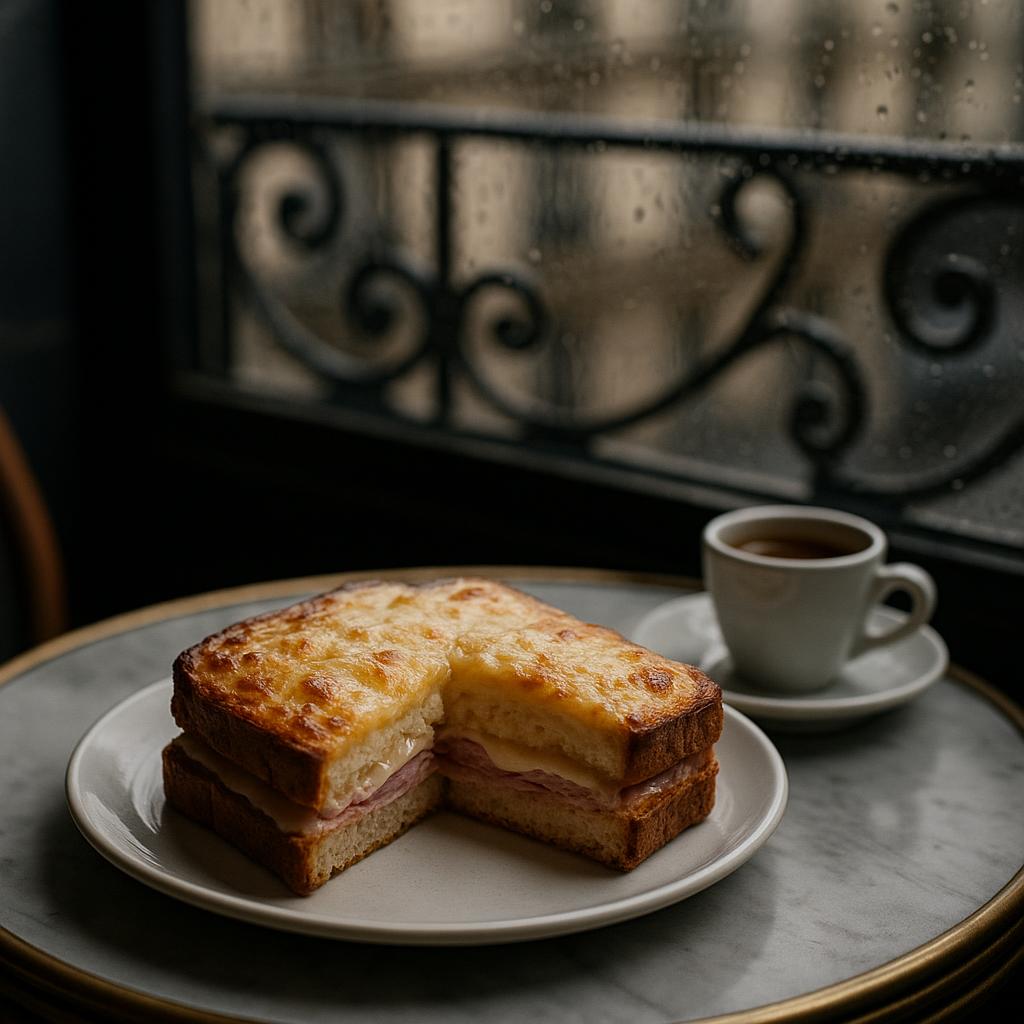
The name is a small joke that stuck: "croque" from croquer, to crunch, and "monsieur" because — according to the most repeated version of the story — a Parisian café owner on Boulevard des Capucines told his patrons in 1910 that the crisp, hot ham sandwich contained "de la viande de monsieur," mister's meat, rather than admit he'd simply run out and improvised. Whether that story is entirely true or has been polished over a century of retelling, the sandwich itself was real enough by 1918 to earn a mention in Proust. Cafés have argued the details ever since: some grill the sandwich simply in butter until the outside crackles, ham and Gruyère melting cleanly inside; the grander version, more common on café menus today, gets a layer of béchamel spread over the top and finished under the grill until it bubbles and browns like a miniature gratin. Top either version with a fried egg and the French rename it croque madame, apparently because the egg looked like a hat.